For over a thousand years, the Agbádá has served as far more than ceremonial dress. It has marked kingship and scholarship, diplomacy and devotion, inheritance and identity. Woven through the history of West Africa itself, it remains one of the continent's most enduring symbols of prestige.
8th–11th Century
The Foundations
Long before it became known as Agbádá, the tradition of the great flowing robe emerged across the early Islamic kingdoms of the western Sahel.
In Takrur and the Ghana Empire, expanding trade routes connected West Africa to North Africa and the wider Islamic world. Alongside scholarship, architecture, and commerce came new traditions of dress—flowing robes suited to climate, faith, and public life.
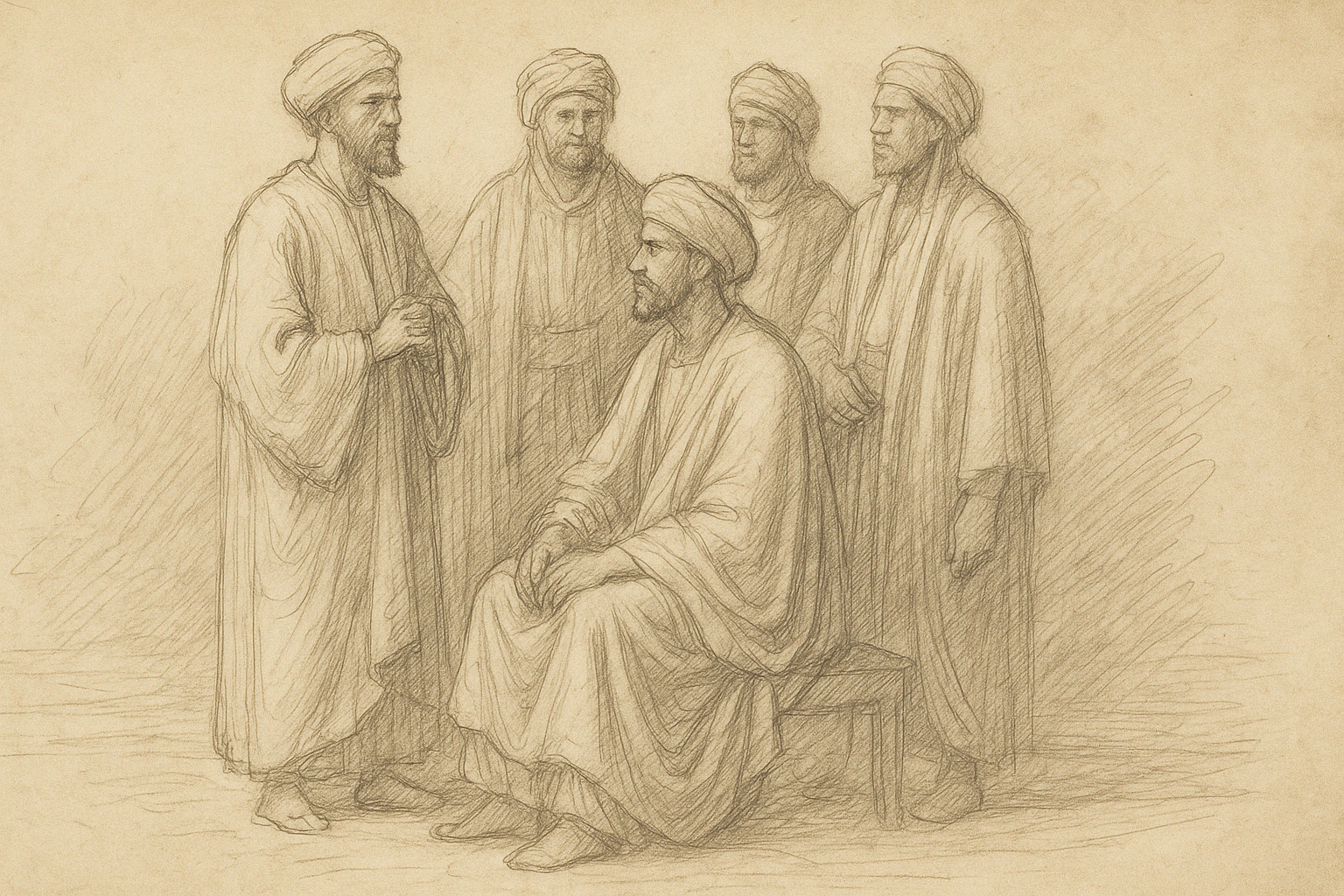
Worn by kings, scholars, judges, merchants, and royal messengers, these garments established a visual language of dignity that would shape West African courtly dress for centuries.
The foundation was never fashion. It was authority.
13th–15th Century
Royal Prestige
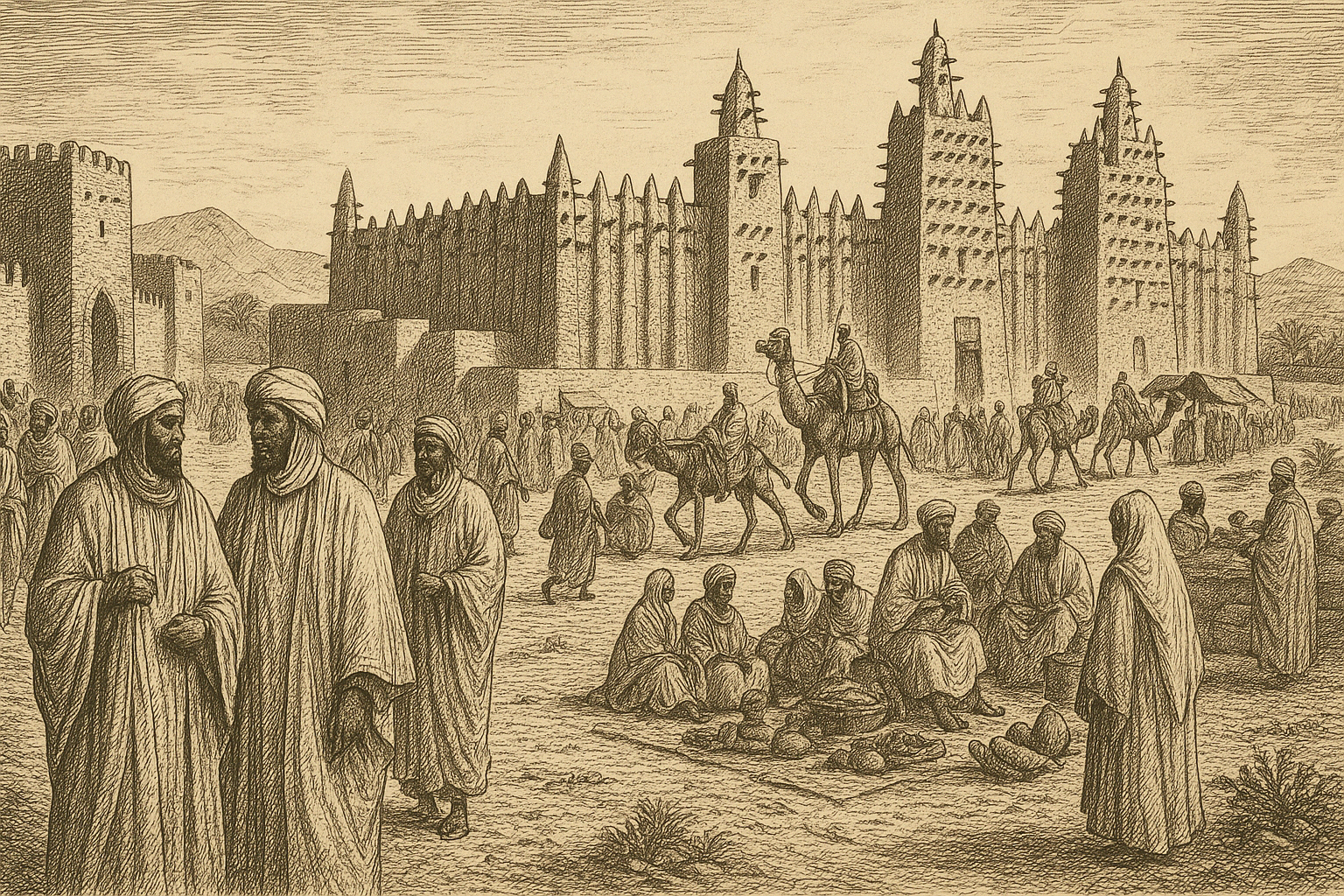
Under the great empires of Mali and Songhai, ceremonial dress reached extraordinary refinement.
Cotton woven across West Africa met imported silks from distant trade networks. Embroidery grew more intricate. Layering became deliberate. Dress evolved into a language of scholarship, prosperity, and sovereign power.
Within the courts of Timbuktu, Gao, and Niani, robes reflected not simply wealth, but wisdom and legitimacy.
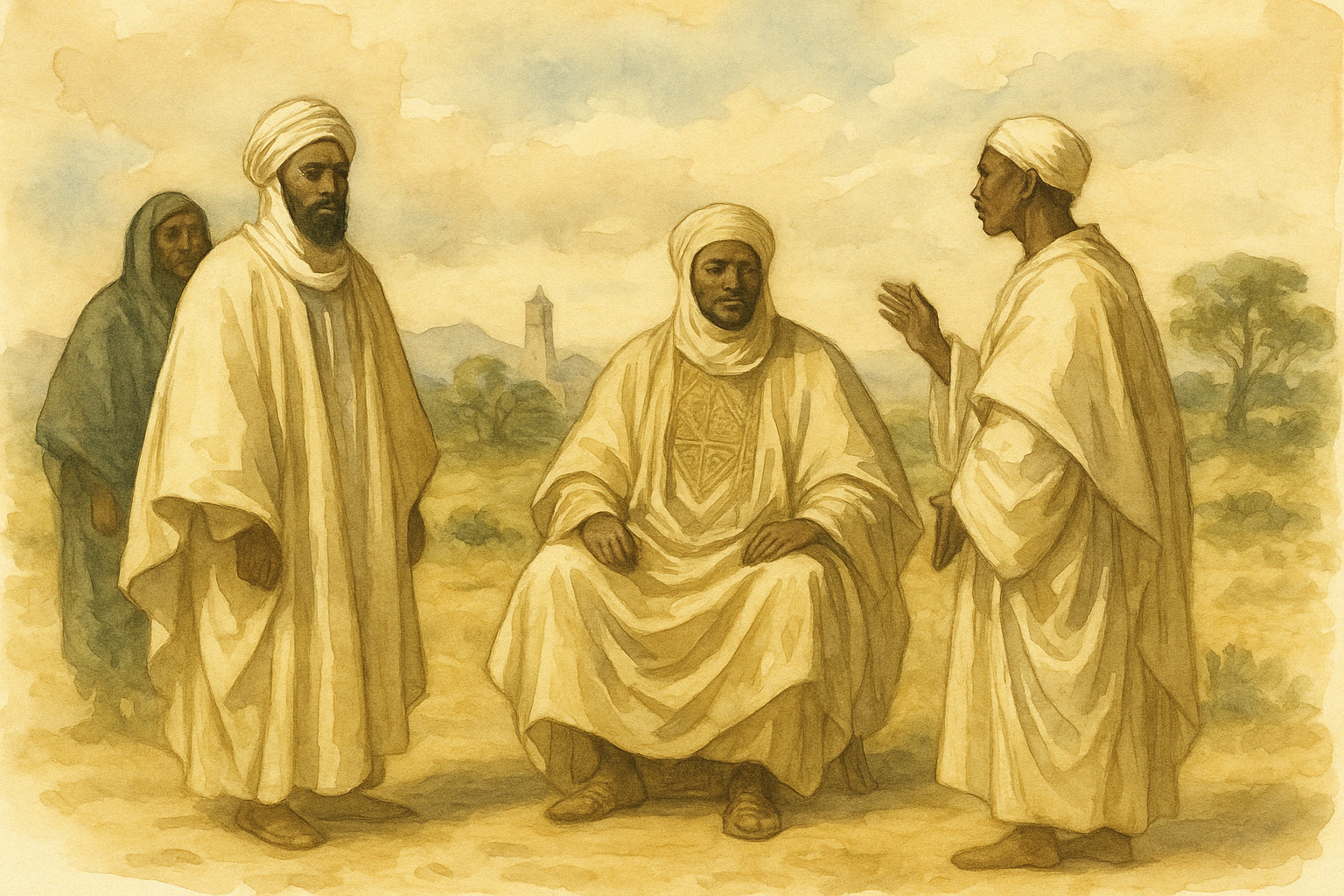
When Mansa Musa undertook his legendary pilgrimage to Mecca, the magnificence of his court introduced much of the world to the extraordinary wealth and sophistication of medieval West Africa.
Power was worn.
15th–17th Century
Cultural Diffusion
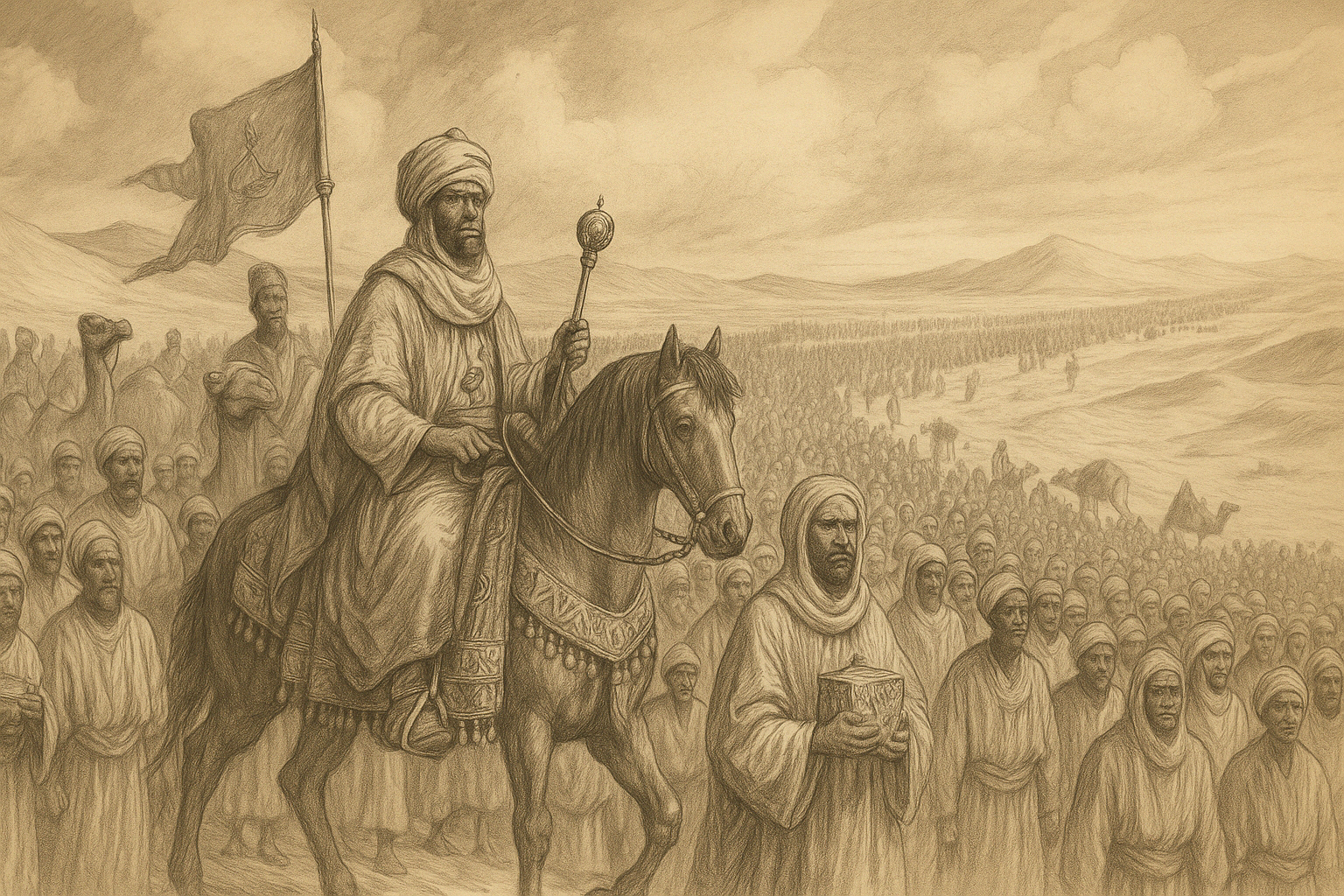
As merchants, scholars, pilgrims, and royal courts moved across West Africa, so too did traditions of ceremonial dress.
Fulani, Dyula, Hausa, Mandé, Wolof, and Yoruba communities each shaped and refined the flowing robe according to their own customs while preserving its essential purpose: to communicate dignity, status, and belonging.
Embroidery marked achievement.
Volume suggested prestige.
Layering reflected rank.
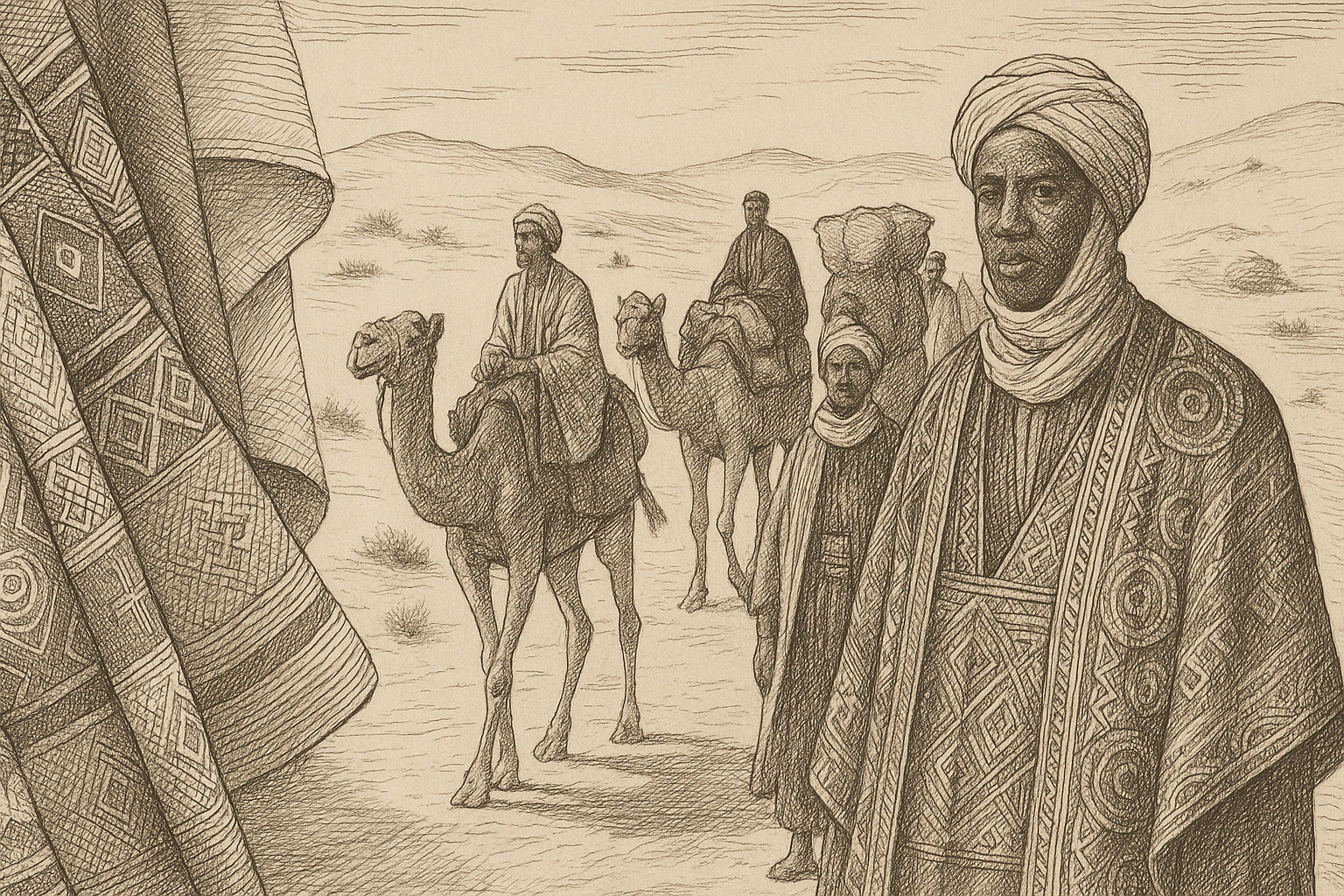
Across kingdoms and languages, the wide-sleeved robe became one of West Africa's most recognizable symbols of public life.
Known by many names—including mbubb, gandora, and k'sa—the garment gradually developed into a shared cultural language spanning much of the region.
Fold by fold, identity was stitched into cloth.
17th–19th Century
The Great Cloak
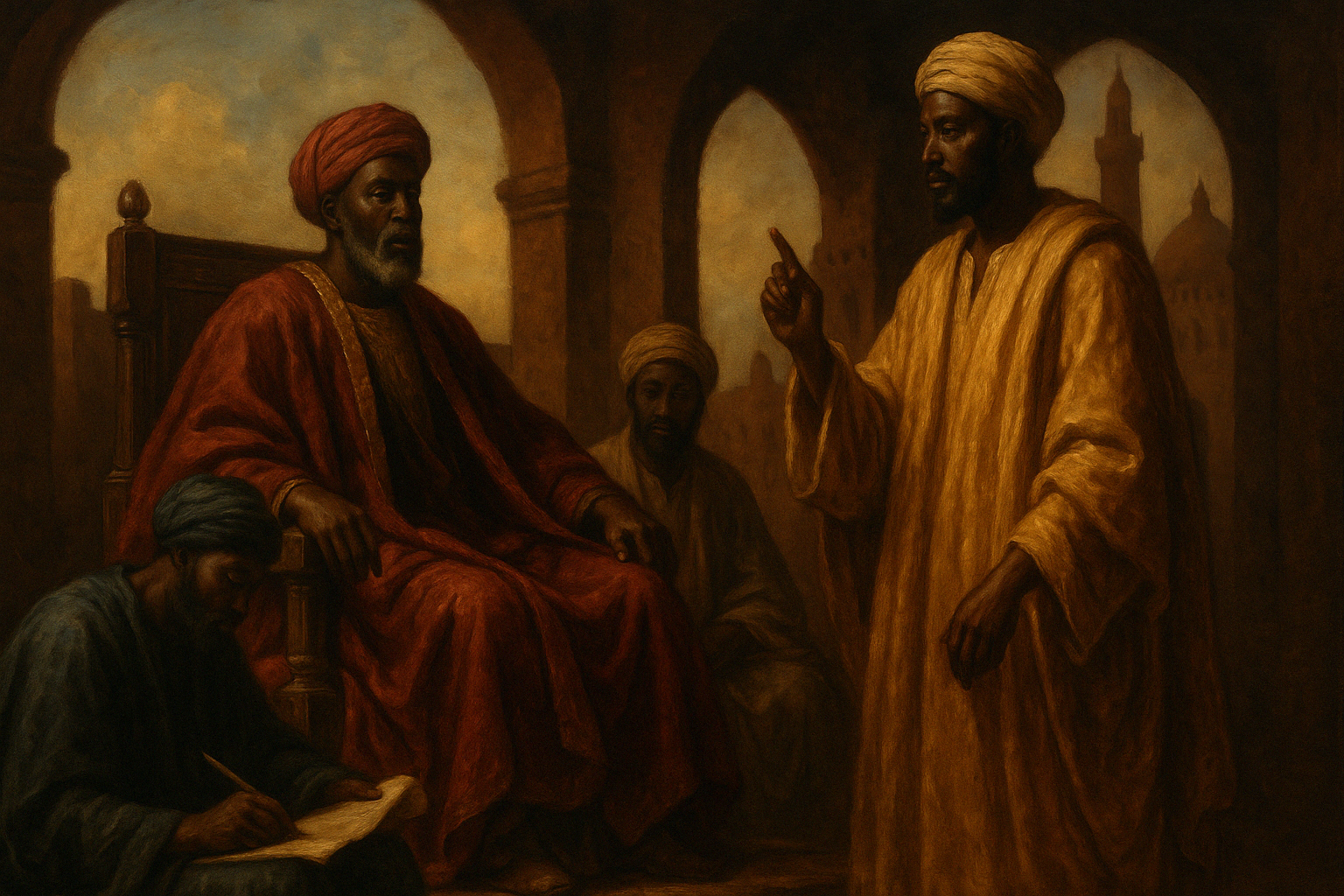
Across West Africa, cloth became more than adornment.
It became inheritance.
It became ceremony.
It became identity.
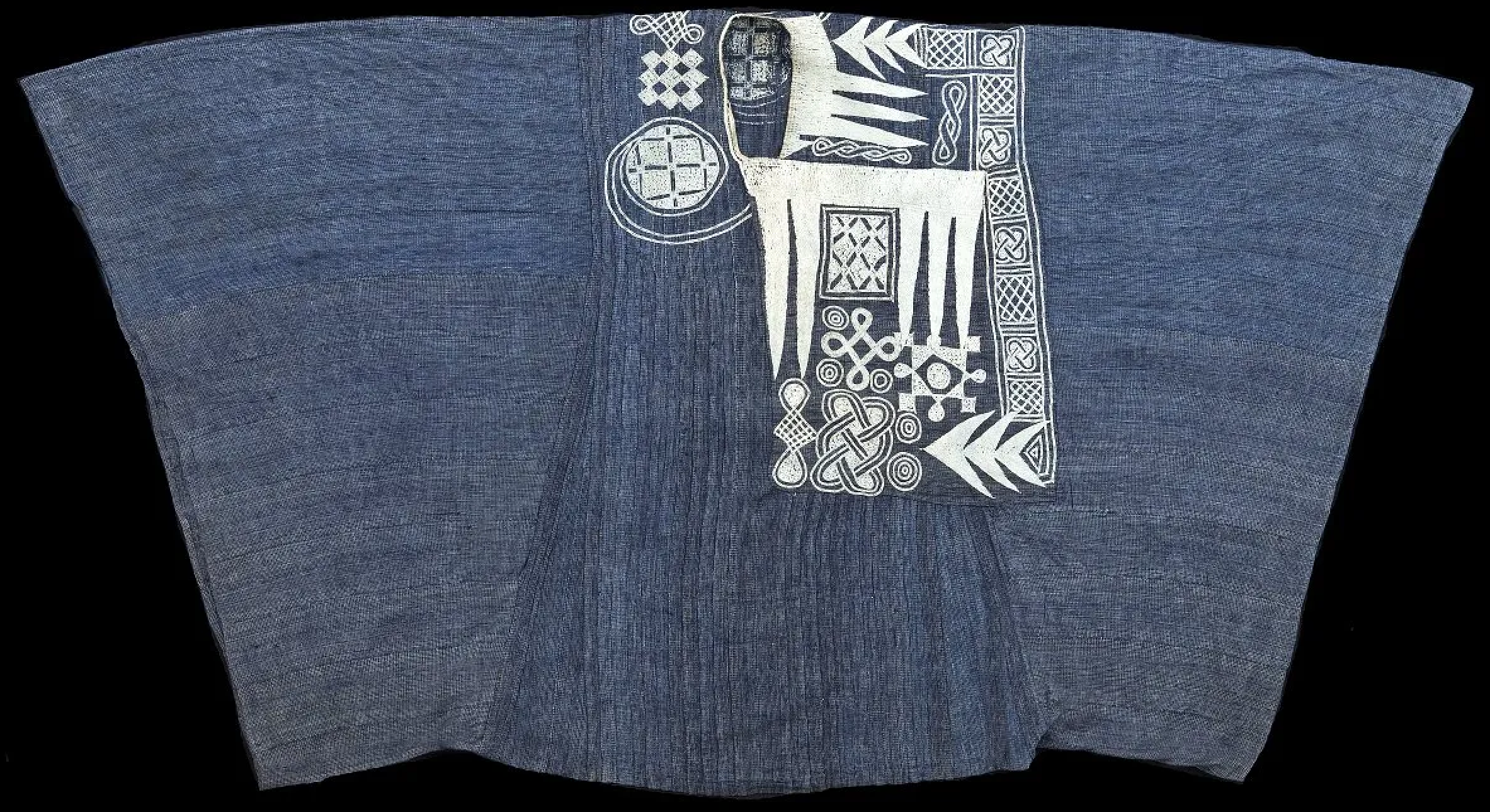
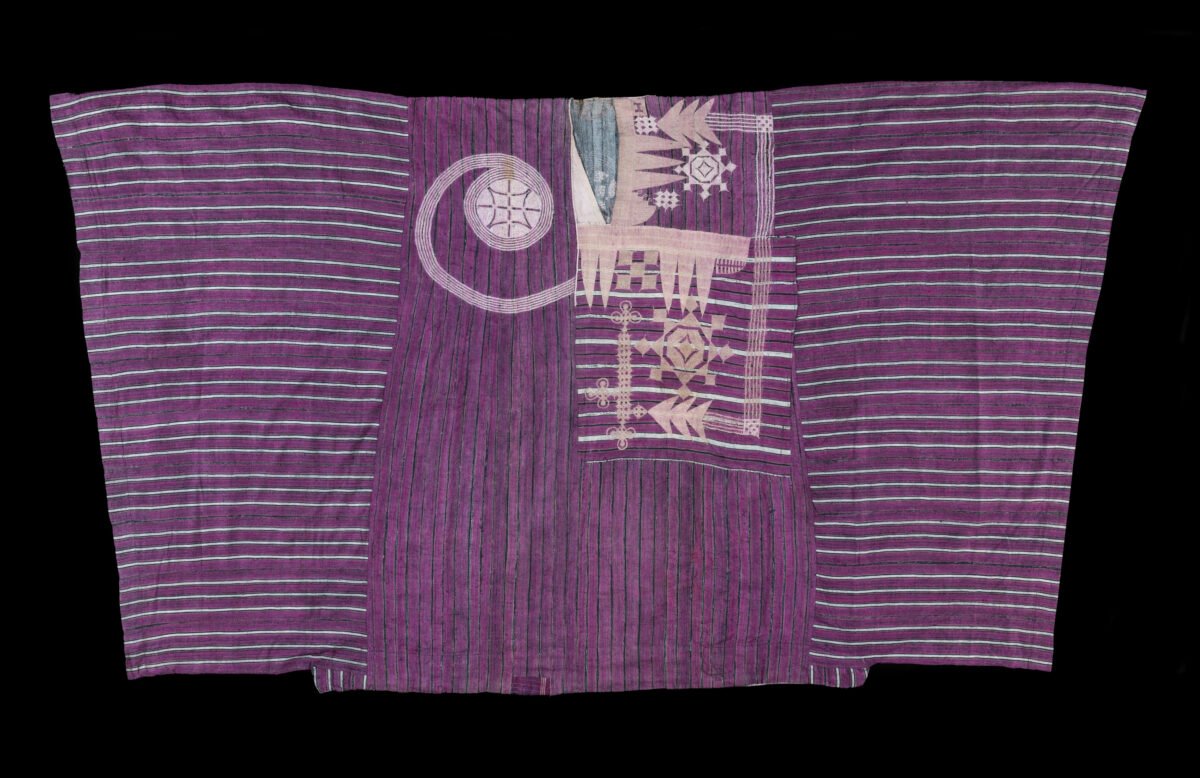
Within Yorubaland, the garment received the name by which it is now known throughout much of the world:
Agbádá—the great cloak.
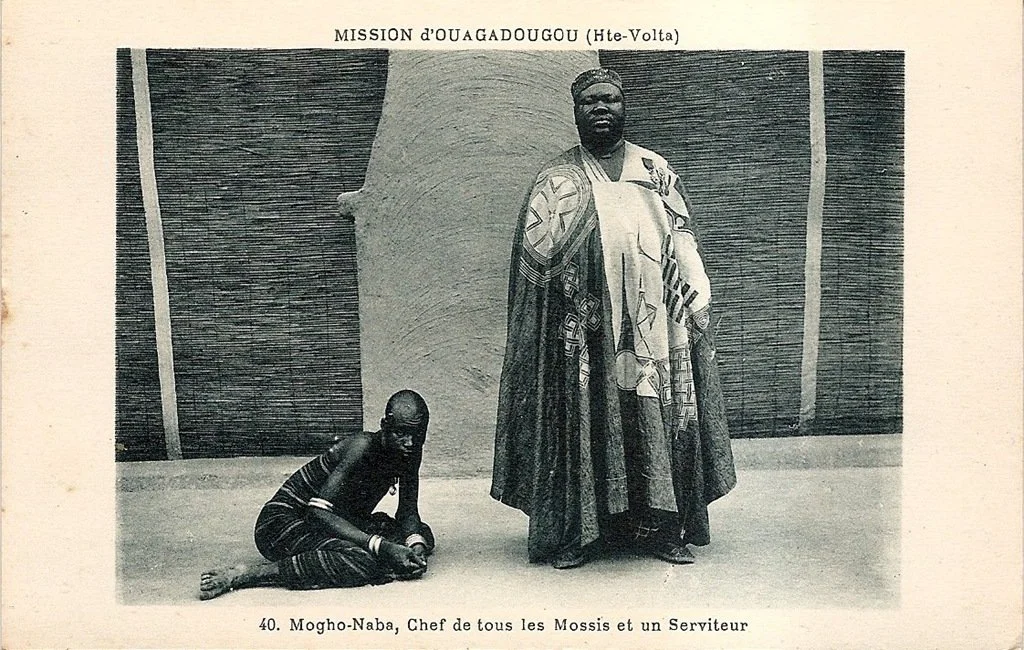
No longer simply worn, it was bestowed. It marked coronations and marriages. Judgment and diplomacy. Celebration and farewell.
Its fabrics carried meaning.
Alaari, woven in crimson silk, announced prestige. Sanyan, crafted from wild beige silk, spoke quietly of ancestry and tradition. Alaró, dyed in indigo, reflected discipline, initiation, and order.
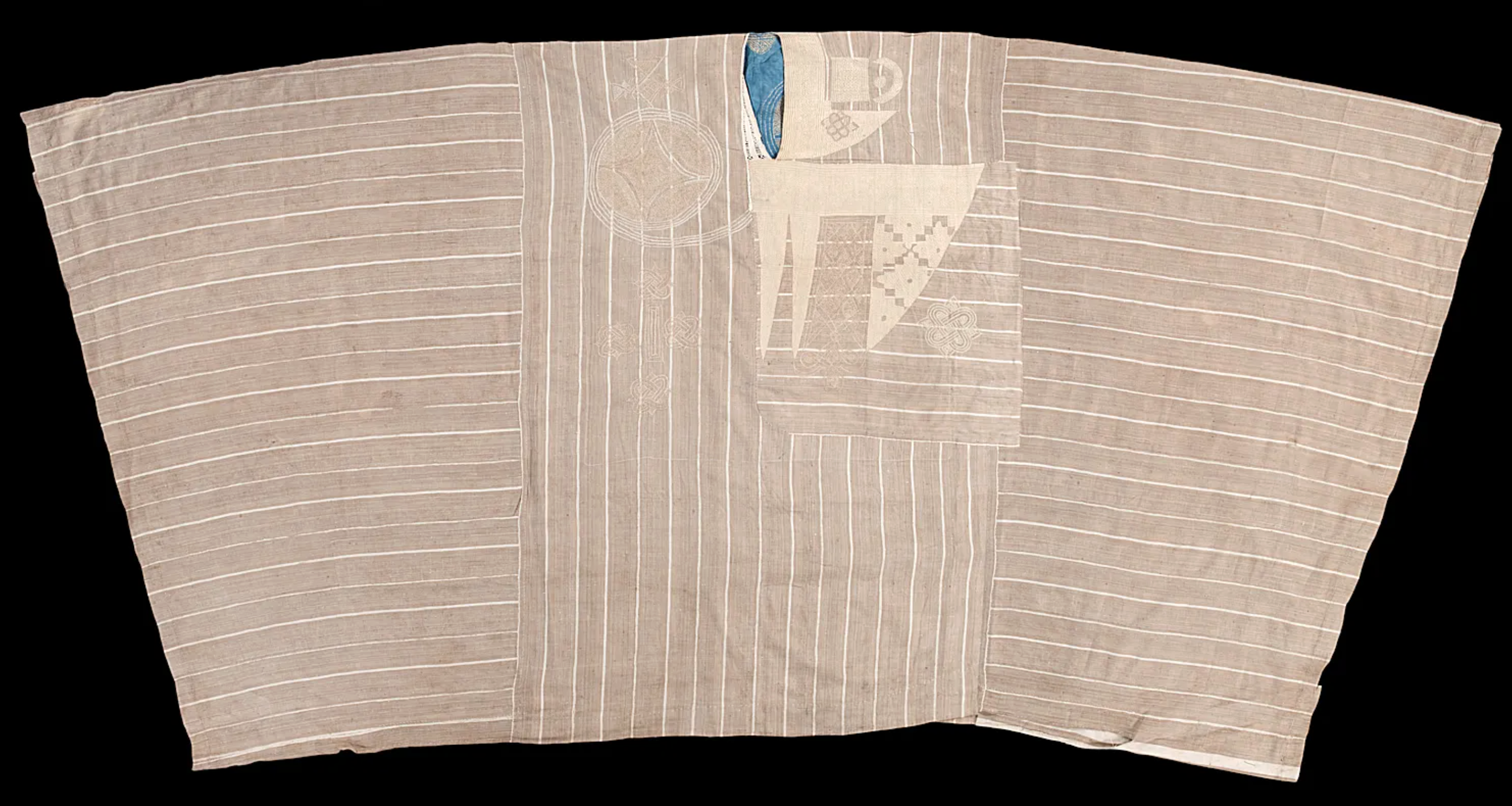
Every stitch expressed intention. Every fold conveyed rank.
Agbádá had become not merely clothing, but the visible architecture of sovereignty.
20th Century
From Ritual to Power Dressing
The twentieth century carried Agbádá beyond royal courts and sacred ceremony.
It entered diplomacy.
Politics.
Academia.
Global culture.
Without abandoning its heritage, it became the dress of presidents, jurists, monarchs, entrepreneurs, artists, and visionaries.
A garment once rooted in royal courts came to represent African confidence on the international stage.
1953
Sir Adetokunbo Ademola
Nigeria's first Chief Justice attends the Coronation of Queen Elizabeth II wearing full Agbádá.
Within one of Britain's most formal ceremonies, Yoruba elegance stood confidently alongside imperial tradition—an expression of intellect, dignity, and self-possession.

1956
Oba Adeniji Adele II
During Queen Elizabeth II's royal visit to Nigeria, the Oba of Lagos walks beside the monarch dressed in richly embroidered Agbádá and traditional Yoruba regalia.
He appears not as a subject of ceremony, but as a sovereign in his own right.

1964
Muhammad Ali
During his visit to Lagos, Muhammad Ali wears Agbádá before thousands of admirers.
The image became more than a portrait.
It became a moment of cultural reunion between Africa and one of the twentieth century's greatest icons.

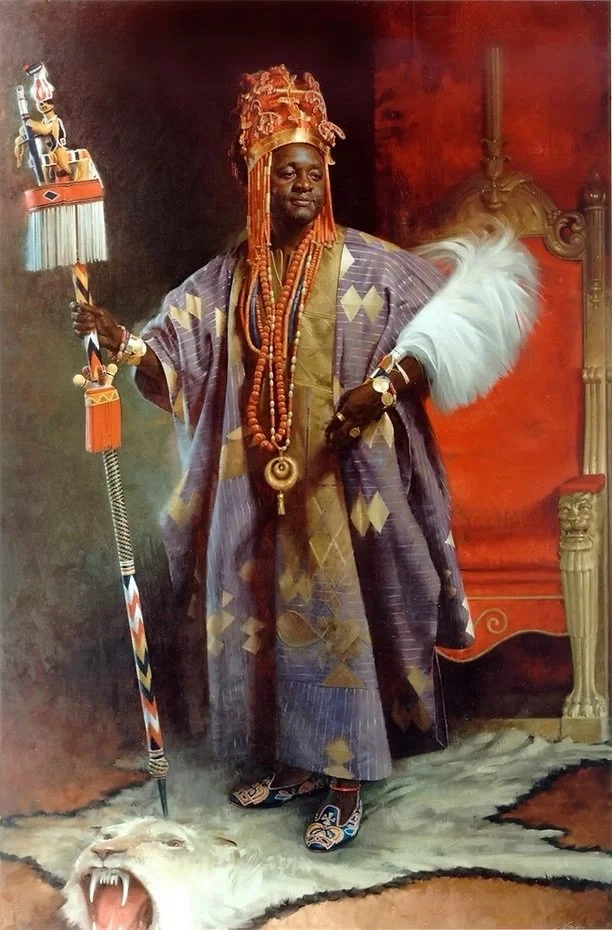
1970
Oba Lamidi Olayiwola Adeyemi III
Photographed during the celebrations surrounding his coronation as the Alaafin of Oyo, the young monarch appears draped in magnificent Agbádá that embodies centuries of Yoruba kingship.
Embroidery, beadwork, and crown unite to transform cloth into royal authority.
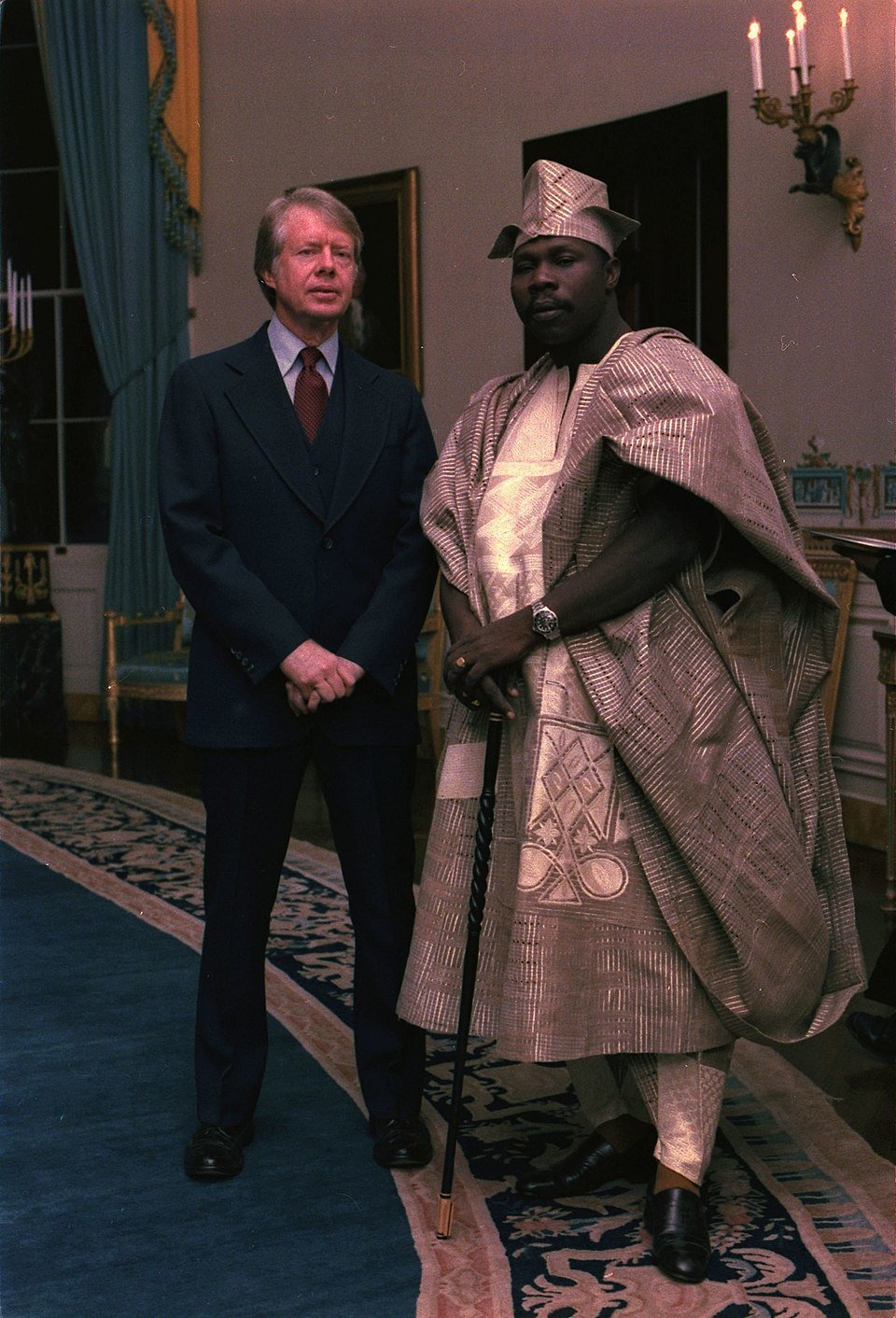
1977
Olusegun Obasanjo
Meeting U.S. President Jimmy Carter at the White House, Nigeria's Head of State arrives in Agbádá.
The image remains one of modern Africa's defining diplomatic portraits—projecting confidence, leadership, and national identity onto the global stage.
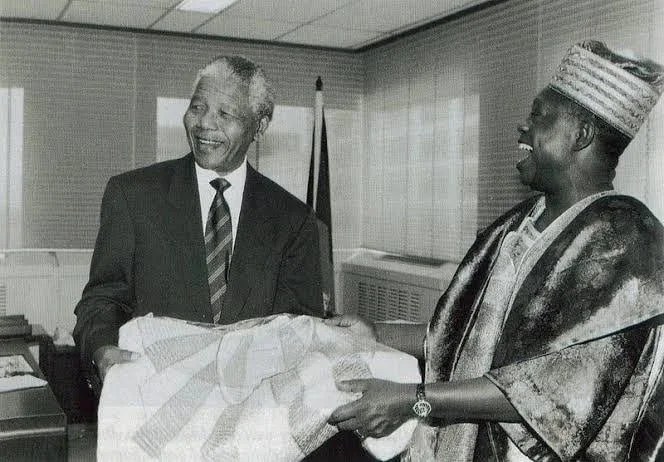
1993
M.K.O. Abiola & Nelson Mandela
Businessman and statesman M.K.O. Abiola presents an Agbádá to Nelson Mandela as a gesture of profound cultural respect.
The exchange reflects a garment capable of carrying not only craftsmanship, but history itself.
21st Century
A Global Revival
Today, Agbádá belongs to the world while remaining unmistakably West African.
It moves through boardrooms and galleries.
State houses and weddings.
Universities and private clubs.
From Lagos to London.
Accra to Atlanta.
Dakar to Dubai.
Its silhouette continues to evolve—broader in influence, unchanged in meaning.
A garment shaped by centuries of ceremony now enters a new chapter—worn by men who understand that elegance is never loud, and that true power rarely needs introduction.

The Story Continues
Every Agbádá carries something larger than fabric.
The memory of kingdoms.
The discipline of master tailors.
The confidence of scholars.
The dignity of kings.
The ambition of a new generation.
The story of Agbádá has never belonged to the past.
It has always belonged to the men who wear it next.